top of page


AV Tech Posts
Helpful blog posts for audiovisual technicians.


How to Nail Your First Video Switcher Gig
This article gives the reader useful information and advice so that they will be prepared for their first video switcher gig.

Steven Visser
Jul 294 min read


Gobos: the Most Underrated Tool in a Lighting Tech’s Kit
This article introduces the reader to the concept of gobos in event lighting.
Steven Visser
Jul 294 min read


Radio Frequencies & Wireless Microphones for Beginners
This article references a video from the Shure Audio Institute that teaches the reader about best practices for radio frequencies and wireless microphones.
Steven Visser
Jul 63 min read

LED Wall for Beginners
This is an article that references a YouTube video that teaches the viewer about LED walls.
Steven Visser
Jul 63 min read

Lighting Fixture Types & Functions
Here's a video explaining the different types and functions of common event lighting fixtures.
Steven Visser
Jul 31 min read
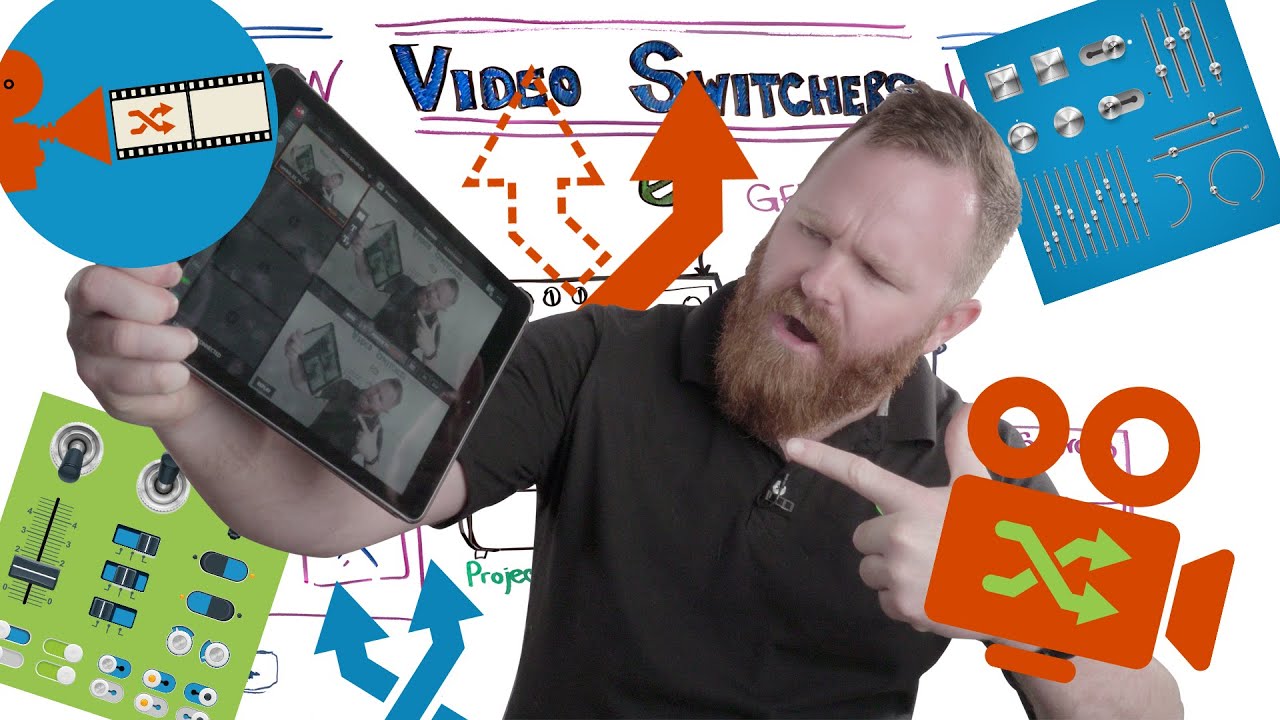
Video 101 - GFX/Video Switchers
Here's a quick video that explains how Video Switchers work! TLDR: How Video Switchers Work — Technical Overview: A practical breakdown of video switcher fundamentals — covering signal routing, output configurations, and when to scale up to advanced switching systems for live event and broadcast productions. Signal inputs and source management: Switchers accept multiple input types across various connector formats — HDMI, VGA, composite, BNC — accommodating sources like pre
Steven Visser
Apr 131 min read


Presets, Cues, Cue Stacks/Lists, Sequences, and Executors
These terms are most commonly used in professional lighting consoles such as those from MA Lighting (e.g., grandMA3) and ETC (e.g., Eos). The exact terminology varies slightly by brand, but the core concepts are similar. Here’s a clear breakdown of each term and how they relate to each other: 1. Presets Definition: Building blocks (raw ingredients). A preset stores a specific value for one parameter (or a group of related parameters) that you can reuse. Examples: A specific r
Steven Visser
Apr 132 min read


Amp Modes - What They Are & When to Use Them
So you’ve got passive speakers and need an external amplifier. Awesome. But it’s not as simple as just connecting the cables, turning the dials to 11 (see Spinal Tap) and walking away. There’s different modes to choose from and they all have different impacts; like how many speakers you can use, how much wattage of output power you get, how you need to run cables into and out of your amp, etc. For the sake of consistency, let’s assume for the rest of this post that we’re usin
Steven Visser
Apr 65 min read


One of the BIGGEST myths in audio…
If you’ve ever worked with wireless microphone kits before, you may already know where I’m going with this. This myth is so prevalent that I’ve met more technicians who believe it than those who don’t. But if you actually research what the correct approach to gain staging digital wireless kits is, you’ll realize this belief is just plain wrong. Here’s one of the biggest audio myths: “You should always set wireless gain to 0dB”. I’m not sure how this myth started. Maybe it’s b
Steven Visser
Apr 63 min read


Cable Gages and Why They’re Important
Power cable gauge (gage) refers to the thickness of the wire conductor, which determines how much electrical current it can safely carry. In North America, this is usually measured using American Wire Gauge (AWG). 1️⃣ How the Gauge System Works 📖 The AWG system is a little counterintuitive: Lower number = thicker wire = more current capacity Higher number = thinner wire = less current capacity *Actual ratings depend on insulation type, temperature, and installation method. 2
Steven Visser
Apr 62 min read


Dip Switches on Dimmers and Controllers
Solved this issue the other day on a job site and thought it would make a good post! Dip Switches are a series of tiny binary switches numbered 1-9 that can be switched ‘on’ or ‘off’. They have different functions on different devices. Sometimes they indicate the radio frequency the device uses to operate - for example, perfect cues. In the case of Dimmers, they determine the starting address of the dimmer. For example, if you have 1 ON and the rest OFF, on a 4 channel dimmer
Steven Visser
Apr 61 min read

New to Sound System Design and Tuning? Start Here (for intermediate audio techs)
A beginner's roadmap for getting into live sound system design and tuning.
Steven Visser
Apr 61 min read


Myth: digital audio sources shouldn’t be set to 100%
There’s a common myth that digital audio sources shouldn’t be set to 100%. The explanations for this belief vary between people but here’s why they’re wrong: Setting digital audio sources to 100% volume is recommended because it preserves the maximum bit depth and signal-to-noise ratio (SNR), avoiding the loss of precision that occurs when digital volume controls reduce the amplitude of the signal. Instead, volume control should be managed in the analog domain by adjusting th
Steven Visser
Apr 11 min read
Networking Fundamentals
Learn networking fundamentals: how to connect devices together on a network. Useful for Dante and wireless control in audio, Artnet or sACN in lighting, programming LED walls (AV over IP), connecting PTZ cameras to controllers and computers, and tons of other use cases. Check out the video below: TLDR: What Is a Network? A Beginner's Guide to How Networks Work A clear, foundational breakdown of what computer networks are, how devices connect, and the key network types you'll
Steven Visser
Apr 12 min read


How to Start a Career as a Touring Tech
While responding to a great post by my friend, @Mark Hunt , I realized it would be really useful to talk about how to start a career as a touring tech for those who are interested in that path. If you live in Vancouver, there’s a few production companies that have touring opportunities: Promosa, Christie Lites, Kian Sound, and if anyone can think of others please add them in a comment below. You can also work for Riggit at Rogers arena and/or IATSE local 118 at BC Place and o
Steven Visser
Apr 11 min read
bottom of page